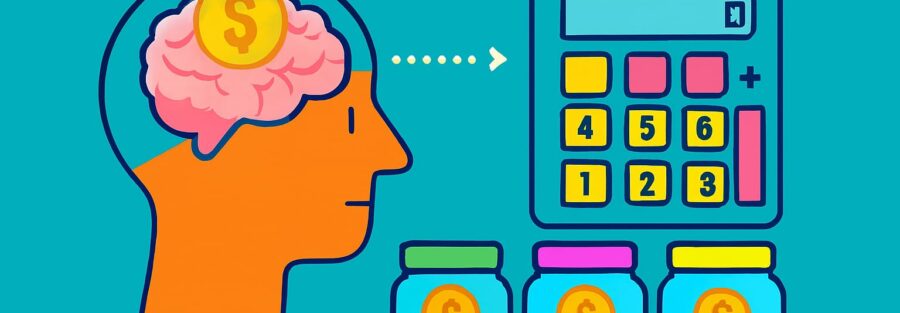
It shows how individuals separate their budget into different accounts for specific purposes.
Mental Accounting and Investments:
Example 1 : People also tend to experience mental accounting bias in investing. When it comes to investing, mental accounting can also cause people to make illogical decisions.Investors invest their wealth based on the source of income. Higher weightage is given to hard earned money like salary as investors usually prefer to take lower risk while investing their salary income. An investor who is young should ideally have a higher portion of his/her wealth in equities. However, since there is a emotional attachment to hard earned money; he may not be willing to invest a larger portion of his salary income in equities (as equities are perceived as risky asset class ). The same investor when faced with windfall gains tend to take higher risk with that amount.
Salary Income : Invest in safe assets
Pain of loss is greater
Windfall Gains : Take risks by speculating
Don’t mind loosing money
Example 2 : Investment with a Loss
Value of money remains the same for an investment made on the advice of a distributor or through own research. However, when evaluating a loss making investment, investors tend to hold on to the same forever if the initial decision to buy was that of the investor himself/herself ( as booking a loss hurts his ego). The emotion of regret is in play here. On the other hand, if the initial decision to buy the investment was as per the recommendation of another person, say, the advisor, the investor would be willing to sell the asset at some point and move on. This decision to sell is taken at the cost of diversification.
To avoid the mental accounting bias, individuals should treat money as perfectly fungible when they allocate among different accounts, be it a budget account (everyday living expenses), a discretionary spending account, or a wealth account ( savings and investments). But it is easier said than done.
Example 3: Overspending on credit card rather than cash
More impulsive buying on a shopping trip could be attributed to the use of credit cards as compared to giving away cash. However,’ money’ is ‘ money’.
Example 4 : Tax Refunds
Tendency to treat tax refunds as a windfall gain and use it for discretionary spending.